
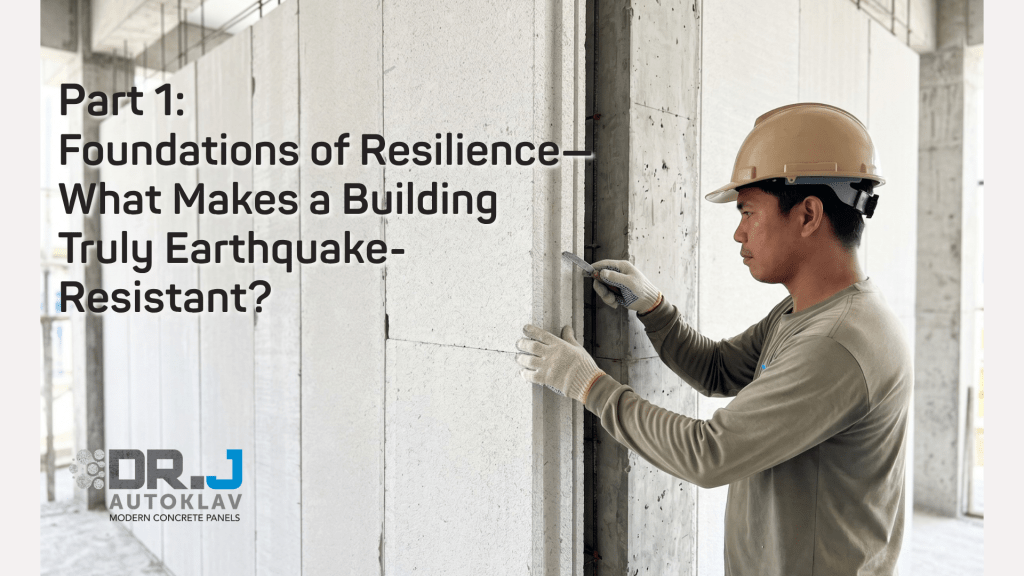
When the ground shakes, our immediate focus turns to the structures sheltering us. The recent earthquake in Mindanao is a sobering reminder that building safety isn’t something to think about after the fact—it is a responsibility that begins long before the first shovel hits the dirt. For property owners and contractors in the Philippines, designing for seismic resilience is no longer optional; it is essential.
But what actually makes a building capable of withstanding an earthquake?
Contrary to popular belief, making a structure rigid and heavy isn’t the answer. True earthquake resistance relies on a combination of smart engineering, high-quality connections, and deliberate material selection.
1. Reducing the Mass
During a seismic event, inertia causes a building to vibrate. The fundamental law of physics applies here: the heavier the building, the more force it absorbs. By integrating lightweight construction materials in the Philippines, builders can significantly reduce the overall seismic load, meaning the structure undergoes less stress when the ground moves.
2. Ensuring Quality Connections
A building is only as strong as its weakest joint. Proper structural design ensures that walls, beams, and columns are securely tied together. High-quality connections between walls and structural members allow the building to dissipate energy and move as a cohesive unit rather than fracturing under pressure.
3. Prioritizing Code Compliance
Long-term structural resilience starts with strict adherence to the National Building Code of the Philippines. True prevention means partnering with structural engineers who understand local fault lines and soil types, ensuring that proper installation techniques are followed from day one.
Ultimately, earthquake preparedness is about proactive choices. By shifts in traditional mindsets—such as choosing innovative, earthquake-resistant walls over dense, heavy masonry—we can build safer communities.
Ready to elevate your next project’s safety standards? Learn how Dr.J Autoklav AAC panels can support modern earthquake-conscious construction by providing the lightweight resilience your building needs. Stay tuned for Part 2, where we dive deeper into the physics of weight and seismic force.
 Dr.J AAC
Leave a comment