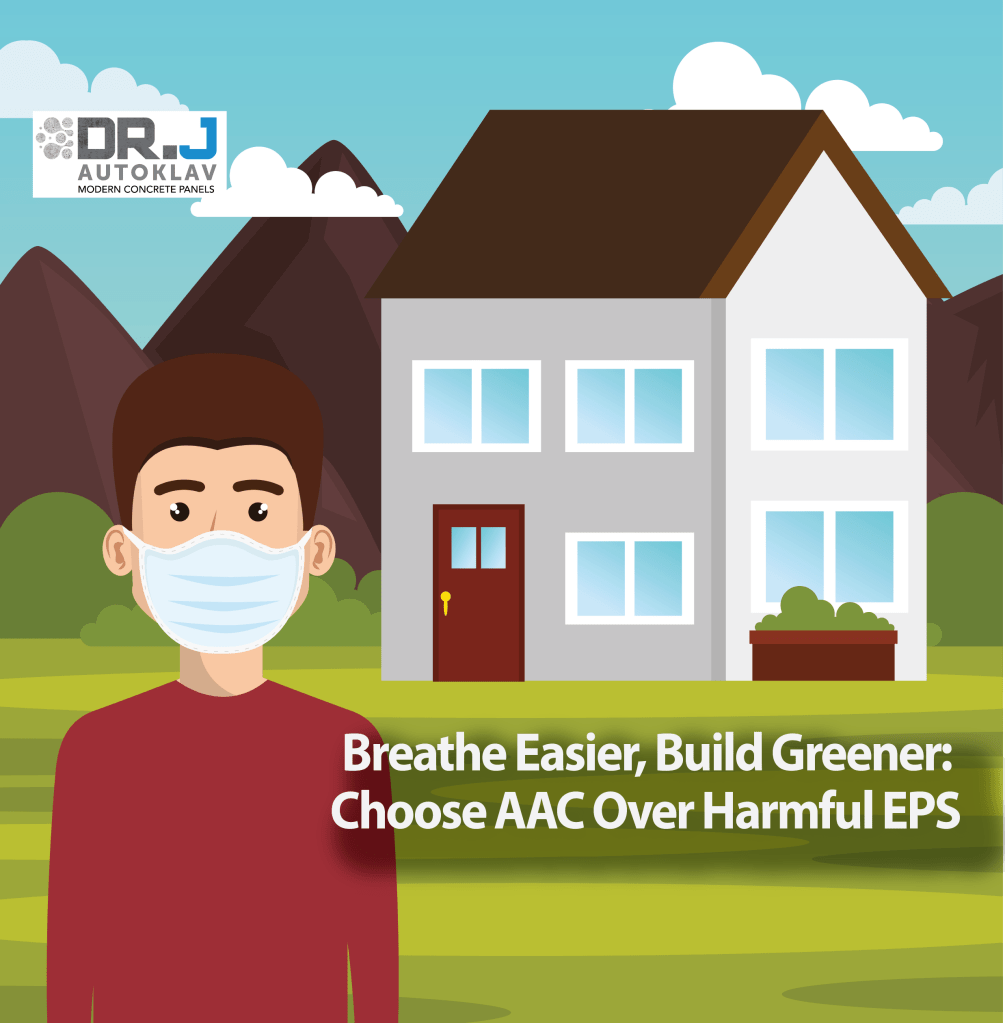
Homeowners, building owners, architects, and designers are you truly considering the long-term implications of your material choices? While Expanded Polystyrene (EPS), commonly known as Styrofoam, might seem like a cost-effective option for wall partitions or insulation, its hidden hazards demand a serious re-evaluation.
Alarmingly, EPS can contain phthalates, chemical additives used to enhance flexibility. These “everywhere chemicals” are not bound to the polystyrene and can leach out over time, potentially contaminating indoor air and posing significant health risks, including reproductive and developmental concerns. Furthermore, styrene, the fundamental building block of EPS, carries its own environmental health dangers.
Imagine a safer alternative: Green, recyclable Autoclaved Aerated Concrete (AAC) wall partitions and floor slabs. Unlike EPS, AAC is composed of natural materials and is free from harmful phthalates and styrene. Its porous structure provides superior thermal insulation, reducing energy consumption and creating a more comfortable living environment without compromising your well-being.
Choosing AAC isn’t just about avoiding hazards; it’s about embracing sustainability. AAC production generates significantly less waste, and the material itself is recyclable, contributing to a greener future for the Philippines and the planet. Make the informed choice. Prioritize health and sustainability. Choose green, recyclable AAC and build a better tomorrow, today.
For related content visit: https://edition.cnn.com/2025/04/29/health/phthalates-heart-disease-wellness/index.html
 Dr.J AAC
Leave a comment